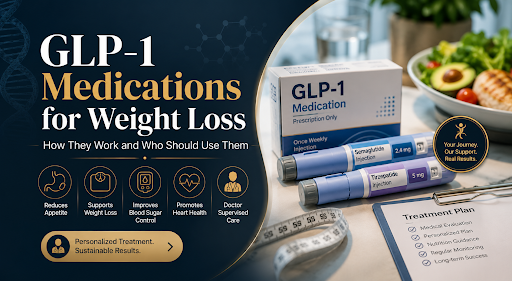
In many cases, weight reduction is quite difficult and cannot be achieved by reducing the caloric content of one’s diet or increasing physical activity alone. Thus, in certain circumstances, medical treatment becomes mandatory. Unlike other trends associated with health issues, GLP-1 weight loss medications are grounded in science. Moreover, they work according to the principles that coincide with those used by our body’s systems.
These medications are not just another trend; they are scientifically supported and designed to harness your body’s own mechanisms. However, how do they actually work, and who may be interested in taking them? Allow us to provide a concise and comprehensible explanation.
Understanding GLP-1: What Is It?
GLP-1 is an acronym for glucagon-like peptide-1, which is a hormone synthesized within the gastrointestinal tract. This hormone serves an important function in maintaining glucose balance and appetite.
When administered in the body, GLP-1:
- Stimulates insulin secretion
- Reduces glucagon production (a hormone that raises blood sugar)
- Slows down gastric emptying (how quickly food leaves your stomach)
- Signals the brain to feel full sooner
These factors make GLP-1 therapies effective tools for treating diabetes and managing weight.
How These Medications Support Weight Loss
GLP-1 therapies have the same effects as natural GLP-1, although they last much longer. GLP-1 therapies are not just appetite suppressants but offer additional benefits.
Key mechanisms include:
- Blocking hunger cues: Feelings of satiety increase when less food is ingested
- Decreasing digestion time: Makes you feel fuller for longer periods
- Enhancing insulin production: Blood sugar levels remain constant, preventing cravings for food
- Decreasing caloric consumption: Naturally leads to gradual weight reduction
In contrast to restrictive diet plans and strenuous physical exercise regimes, this method will go hand in hand with your body.
Why Medical Supervision Matters
Despite their effectiveness, it is important to emphasize that these drugs are not intended for entertainment purposes. Before starting the therapy, you need to undergo a systematic medical evaluation.
In particular, doctors pay attention to:
- Body Mass Index (BMI) score
- Any existing illnesses, such as type 2 diabetes or hypertension
- Earlier attempts at weight loss
- Lifestyle factors and willingness to make changes
That way, the treatment will be tailored to your specific case and will prove harmless.
Personalization: Why One Size Doesn’t Fit All
The weight loss experience differs from one person to another, and therefore, there should be an individualized approach in the use of medical interventions. Things like the person’s metabolic rate, hormone levels, any pre-existing health problems, and even the activities he or she engages in on a daily basis may determine the effect of the medication.
The effectiveness of any treatment program will depend on how well it is planned and customized for each particular case. In this way, the dosages, length of time under treatment, and supplementary measures will all be optimized.
Who Should Consider This Treatment?
Of course, not all people suffering from weight-related problems need these medications. Yet there are cases in which GLP-1 treatments prove particularly useful.
You may be a suitable candidate if:
- Your BMI is 30 or higher (classified as obesity)
- Your BMI is 27+ with related health issues (e.g., diabetes, high blood pressure)
- You have not seen results with diet and exercise alone
- You are committed to long-term lifestyle changes
When used alongside healthy nutrition and physical activities, these medications yield excellent results.
Midway Perspective: Effectiveness and Expectations
It is necessary at this point to emphasize that GLP-1 weight loss medications do not provide miraculous effects but are means of gradual weight loss under medical supervision.
Typically, patients report:
- Gradual weight loss over several months
- Increased energy levels
- Improved regulation of food intake
- Lower chances of developing diseases associated with obesity
However, the effectiveness of the drugs depends on compliance, behavior, and overall health condition. Abruptly discontinuing the use of the medication may lead to weight gain, requiring continuous medical monitoring.
Potential Side Effects to Know
Like any other drug-based treatment, GLP-1 drugs may cause side effects in certain people. The majority of side effects are relatively mild and disappear with time.
Common side effects include:
- Nausea
- Vomiting
- Diarrhea or constipation
- Mild abdominal discomfort
Less common but important considerations:
- Risk of dehydration if symptoms persist
- Rare cases of pancreatitis or gallstone formation
- Not suitable for individuals with certain thyroid conditions
Follow-ups will allow keeping track of these outcomes and make any necessary adjustments to the program.
Lifestyle Still Plays a Key Role
While medication can play an important role in successful treatment, it will be difficult to achieve long-term weight reduction without adopting healthy daily behaviors. In addition to taking GLP-1 drugs, patients should have access to:
- Balanced, nutrient-rich meals
- Regular physical activity
- Adequate sleep
- Stress management
View medications as a tool that will help you maintain healthy behaviors, not as a substitute.
A Shift in How We Approach Obesity
The increased popularity of GLP-1 agonists is connected to changes in attitudes toward obesity. The condition is now recognized as a multifactorial disease driven by hormonal factors, metabolic disorders, and genetic factors.
Such a change in perspective helps eliminate stigma and encourages people to seek professional advice on treatment options rather than relying on ineffective or unsafe methods.
A Smarter Step Toward Sustainable Weight Care
The best way to choose a weight loss strategy is highly personal, and sometimes the help of medications could be an answer for those who have not yet seen positive results from traditional approaches. There is evidence to back up the efficiency of GLP-1 weight loss medication as an effective alternative.
If you have this in mind, it is necessary for you to seek assistance from qualified professionals who will take you through the process. One such place that deserves your trust is MetaHeal-Laparoscopy and Bariatric Surgery Center, where you will be assured of quality evaluation and treatment programs that suit your specific health requirements. Whether you’re exploring medication or other weight management options, their team ensures you receive informed, compassionate care every step of the way.