


Laparoscopic Access
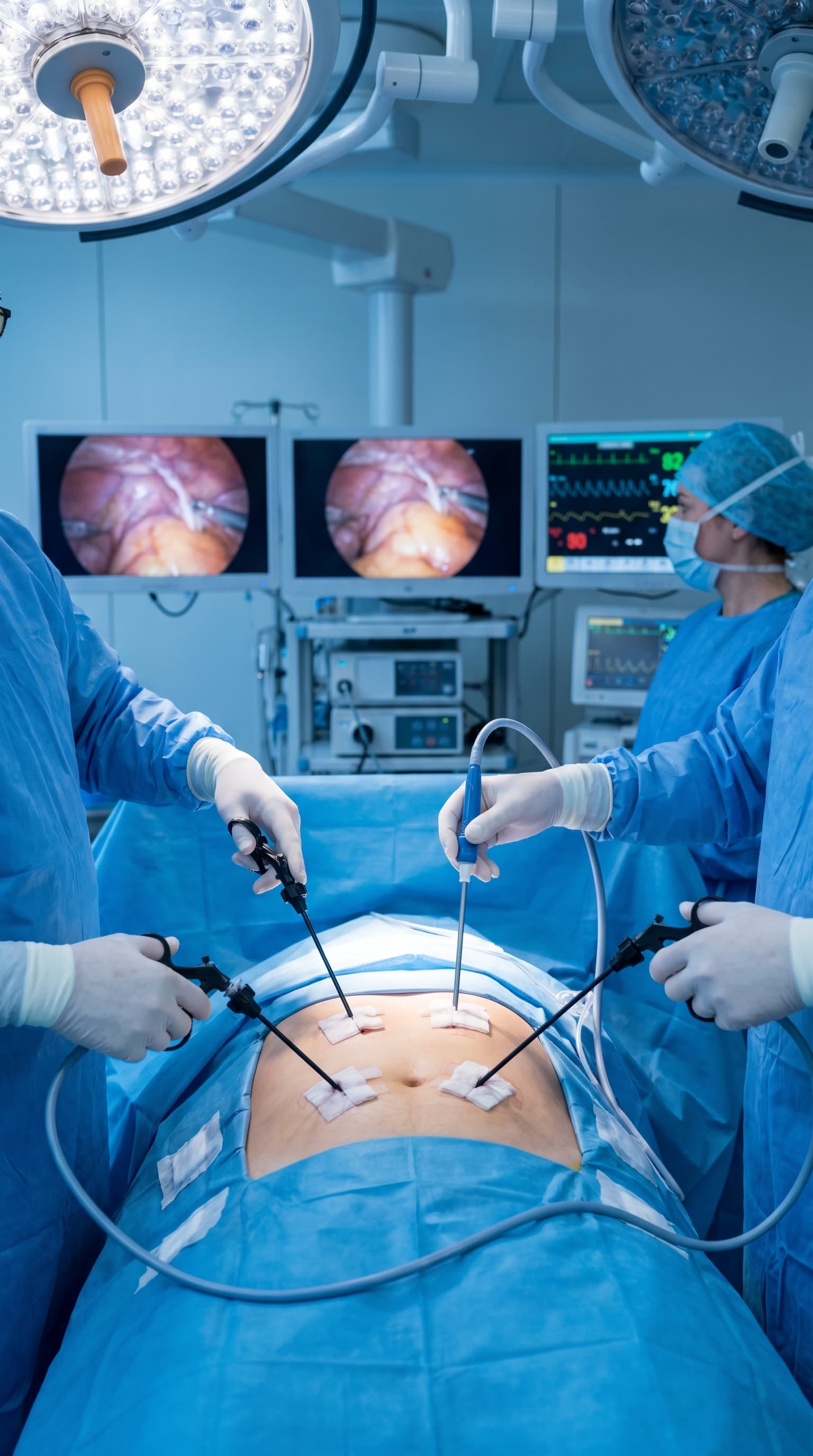
Small abdominal incisions are used to insert a laparoscope and surgical instruments, allowing the surgeon to view the hernia and surrounding structures on a monitor.
A minimally invasive surgical procedure to repair a weakened area around the navel and reduce the risk of complications associated with an untreated hernia.
Understanding Umbilical Hernia Surgery
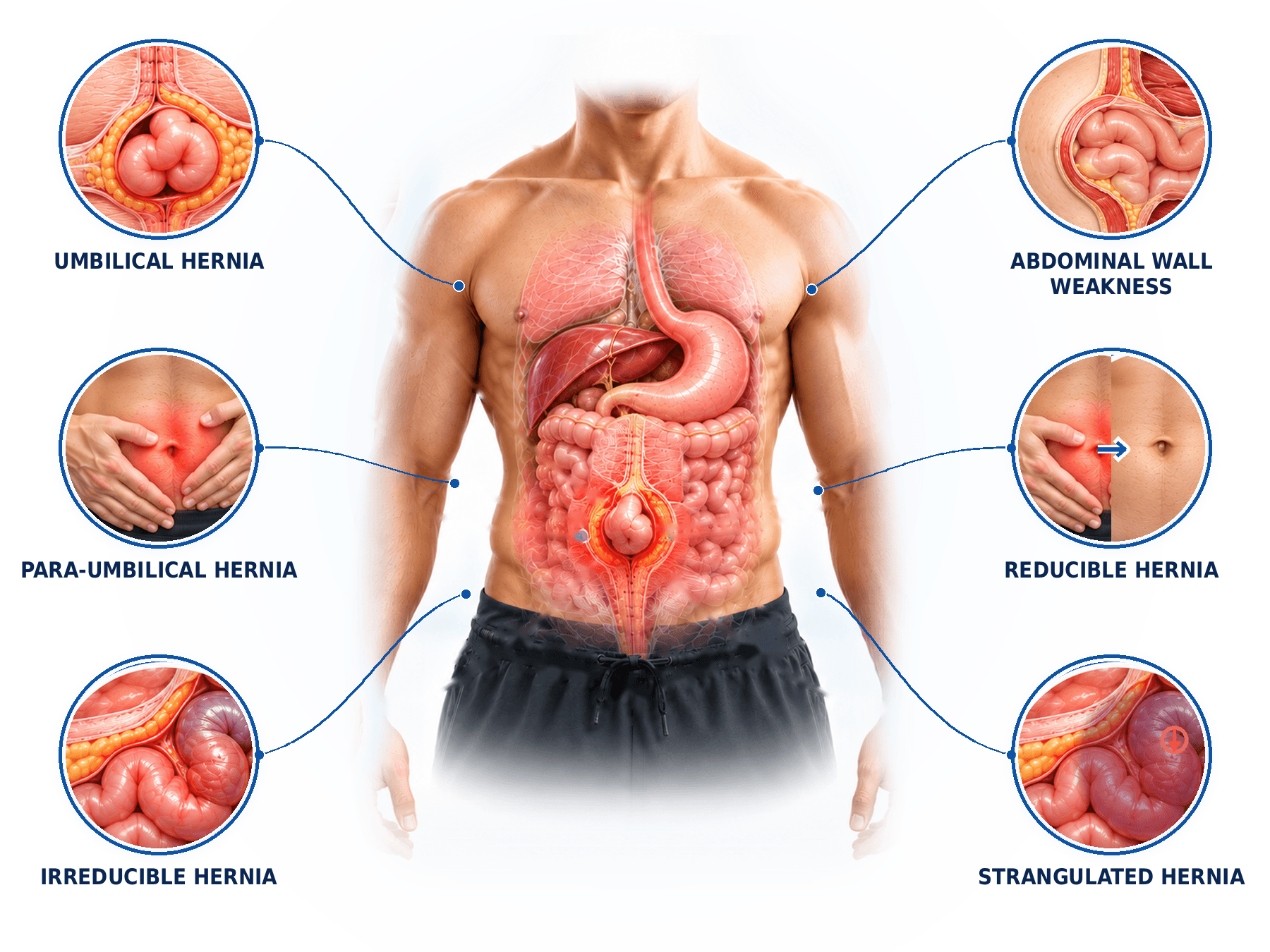
An umbilical hernia develops through a weakness in or around the navel. It may occur due to weakness in the abdominal muscles or increased pressure within the abdomen.
Factors that can increase intra-abdominal pressure include chronic cough, constipation, vomiting, repeated pregnancy, heavy weight lifting, and enlarged prostate or urinary obstruction.
Umbilical hernias may be reducible, when the contents can return to the abdomen, or irreducible, when they cannot be pushed back. An incarcerated hernia may cause intestinal obstruction, while a strangulated hernia occurs when the blood supply to the hernia contents is compromised and requires urgent treatment.
In adults, a hernia occurring just above or below the navel is often referred to as a para-umbilical hernia. These hernias are more common in women and are associated with factors such as obesity and repeated pregnancies. They are also more frequently seen in adults over 40.
How Umbilical Hernia Surgery Works
Laparoscopic umbilical hernia repair is performed through small abdominal incisions using a laparoscope and specialised surgical instruments.
Small abdominal incisions are used to insert a laparoscope and surgical instruments, allowing the surgeon to view the hernia and surrounding structures on a monitor.

The hernia contents, which may include omental fat or intestine, are gently returned to the abdominal cavity.

The weakened area or hernia defect around the navel is repaired using an approach selected according to the size and characteristics of the hernia.

An appropriately sized mesh may be placed where suitable to reinforce the weakened abdominal wall and support the repair.

The procedure is generally performed under general anaesthesia, and the surgical technique is selected according to the individual hernia and the patient's overall health.
Who Should Consider Umbilical Hernia Surgery

Have pain or discomfort around the navel.

Have a swelling or lump that is increasing in size.

Have an irreducible or incarcerated hernia.

Have skin ulceration over the hernia.
Have a hernia that has ruptured.
Have a hernia associated with intestinal obstruction.
Have a strangulated hernia requiring urgent treatment.
Have an adult umbilical hernia that requires surgical correction.
Benefits of Umbilical Hernia Surgery
Smaller surgical incisions
Less postoperative pain and discomfort
Early mobilisation after surgery
Shorter hospital stay in many cases
Faster return to normal activities and work
Better visualisation of the surgical area through magnified laparoscopic imaging
Particularly useful in appropriately selected patients with obesity
Mesh reinforcement may provide additional support and help reduce recurrence in suitable cases

Choosing umbilical hernia surgery in Mumbai provides a personalized approach to repairing the hernia while considering the patient's condition and surgical requirements.
Possible Risks & Side Effects

Temporary pain or postoperative discomfort may occur during recovery.

Bleeding may occur during or following surgery.

Infection may develop at the surgical site or involve the mesh in some cases.

A seroma or fluid collection may develop around the repaired area.

The umbilical hernia may recur after surgical repair in some patients.

Adhesions or bowel obstruction may occur in some patients following abdominal surgery.
Mesh shrinkage or compression may occur in some cases after mesh-based repair.
Mesh migration is a possible mesh-related complication after hernia repair.
*Careful surgical planning, appropriate mesh selection, postoperative monitoring, and follow-up help support safe recovery.
Our Approach to Umbilical Hernia Surgery

01
A detailed assessment of your hernia, symptoms, medical history, and overall health to determine the most appropriate treatment approach.

02
An individualized surgical plan based on the size, location, characteristics of the hernia, and your specific health requirements.
03
When appropriate, laparoscopic techniques are used to provide a magnified view of the surgical area and support minimally invasive hernia repair.

04
Guidance is provided on wound care, pain management, mobility, physical activity, and recovery following surgery. Most patients can be discharged the next day, depending on their recovery and overall condition.

05
Follow-up consultations help monitor healing, recovery, and any signs of recurrence or complications.
Frequently Asked Questions
There is no medical treatment that permanently repairs an adult umbilical hernia. Surgery may sometimes be deferred temporarily for a reducible hernia or when a patient is medically unfit for surgery. An irreducible or strangulated hernia may require urgent surgical treatment.
The surgeon uses small incisions to insert a laparoscope and surgical instruments. The hernia contents are returned to the abdominal cavity, the defect is repaired, and mesh may be placed to reinforce the area where appropriate.
Some pain or discomfort can occur after surgery. Laparoscopic repair may help reduce postoperative discomfort in appropriately selected patients.
Most patients are discharged the next day after surgery, depending on their recovery, medical condition, and the surgeon's assessment.
Recovery varies depending on the individual and the complexity of the repair. Your surgeon will advise you when you can safely resume work, exercise, and other activities.

Umbilical Hernia Care Insights
Consult with an experienced specialist and take the first step toward better health, improved quality of life, and long-term wellness through advanced bariatric, laparoscopic, and robotic surgical care in Mumbai.




3K+ Satisfied Patients