


Clinical Evaluation
The hernia is assessed through clinical examination, with ultrasound considered where necessary to evaluate the defect, its contents, and the appropriate surgical approach.
A surgical procedure to repair a weakness in the abdominal wall in the groin region and reduce the risk of complications associated with an untreated inguinal hernia.
Understanding Inguinal Hernia Surgery
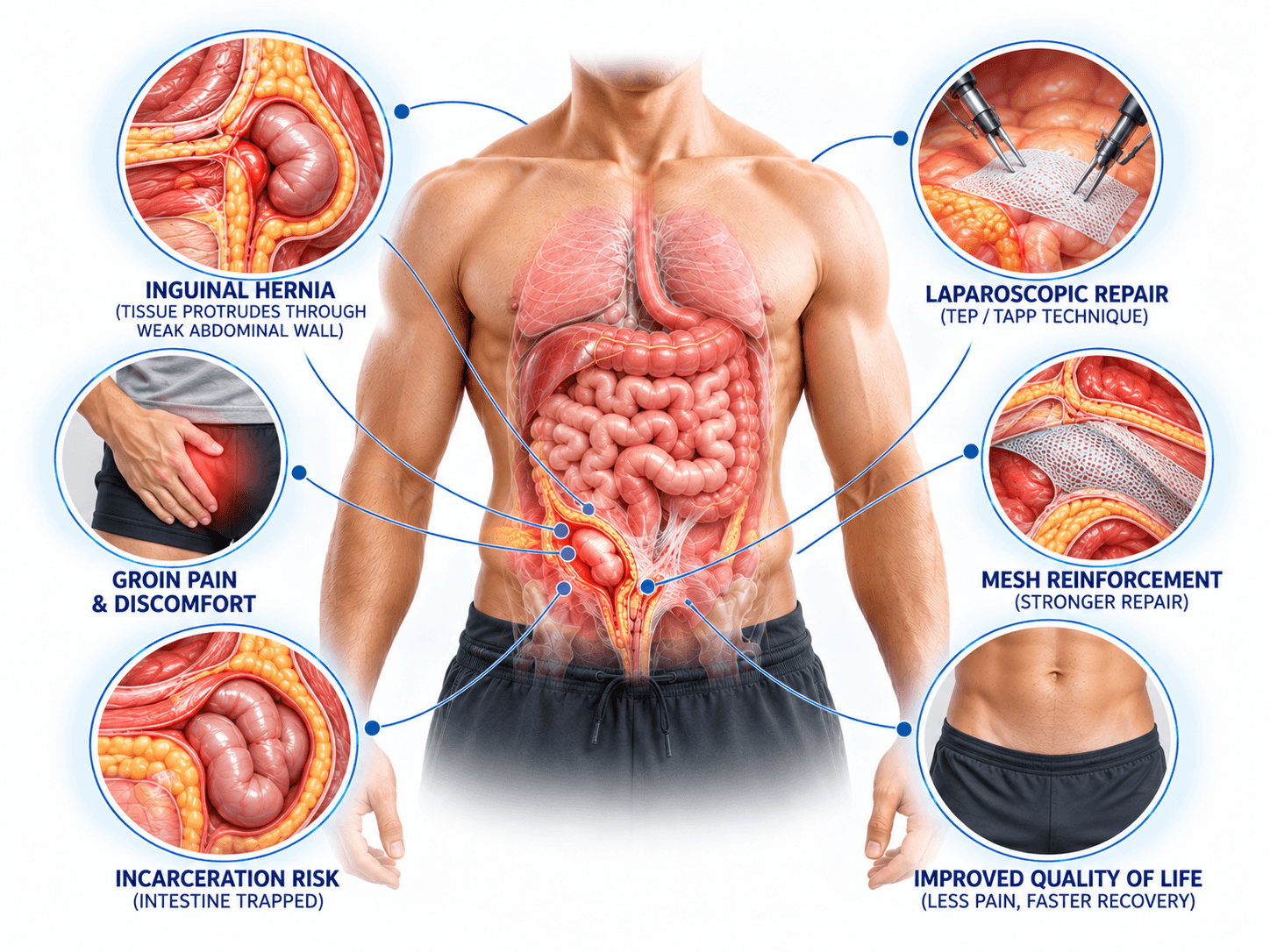
An inguinal hernia develops when tissue protrudes through a weakened area of the abdominal wall in the groin region. It is one of the most common types of hernia and may occur due to an existing weakness in the abdominal wall, increased pressure within the abdomen, or a combination of both.
Factors that may contribute to an inguinal hernia include pre-existing weakness of the abdominal wall, chronic cough or bronchitis, chronic constipation, straining while passing urine, pregnancy, increased intra-abdominal pressure, and recurrence after previous inguinal hernia repair.
Inguinal hernias may be classified as direct, indirect, or combined. Femoral hernias also occur in the groin region but are considered a separate type of groin hernia.
In children, inguinal hernias are often congenital and may become visible when the child cries, coughs, or strains.
Inguinal hernia repair may be performed through an open or minimally invasive laparoscopic approach depending on the patient's hernia, medical history, and overall health.
How Inguinal Hernia Surgery Works
Diagnosis is primarily based on clinical examination. An ultrasound may be recommended when required to assess the defect and its contents or to support the diagnosis.
The hernia is assessed through clinical examination, with ultrasound considered where necessary to evaluate the defect, its contents, and the appropriate surgical approach.

Open repair is performed through an incision in the groin. Depending on the patient's age and condition, the hernia sac may be treated and the weakened area repaired and reinforced. Synthetic mesh is commonly used for reinforcement in adult hernia repair.

Totally Extraperitoneal repair is a minimally invasive technique in which the hernia is repaired and synthetic mesh is placed in the preperitoneal space without entering the abdominal cavity.

Transabdominal Preperitoneal repair is performed through small abdominal incisions using a laparoscope. The preperitoneal space is accessed and synthetic mesh is placed to reinforce the weakened area.

The surgeon recommends the most appropriate open, TEP, or TAPP approach based on the type of hernia, previous repairs, medical history, and overall clinical profile.
Who Should Consider Inguinal Hernia Surgery

Have pain or discomfort in the groin.

Have a swelling or lump that increases when standing, walking, coughing, or straining.

Have a swelling that reduces when lying down.

Have swelling extending towards the scrotum.
Have a hernia that becomes difficult or impossible to push back.
Have an incarcerated or irreducible hernia.
Have symptoms suggesting intestinal obstruction.
Have a recurrent inguinal hernia.
Have been advised by your surgeon that surgical repair is appropriate.
Benefits of Inguinal Hernia Surgery
Repair of the weakened area responsible for the hernia
Relief from pain and groin discomfort
Smaller surgical incisions with laparoscopic repair
Less postoperative pain and discomfort in appropriately selected patients
Earlier mobilisation
Faster recovery and return to normal activities
Earlier return to work in suitable patients
Synthetic mesh reinforcement to support the repaired area
Laparoscopic repair can be particularly useful in selected recurrent inguinal hernias

The choice between open and laparoscopic repair depends on the patient's individual condition, previous surgery, type of hernia, and overall health.
Possible Risks & Side Effects

Temporary postoperative pain or discomfort may occur during recovery.

Swelling or bruising may develop around the surgical or groin area.

Bleeding or infection of the surgical wound may occur in some patients.

A seroma or temporary fluid collection may develop around the repaired area.

Nerve irritation or injury may cause numbness, tingling, or discomfort around the groin.

Persistent or chronic groin pain may occur after surgery in some patients.
The inguinal hernia may recur after repair in some cases.
Blood clots may develop due to reduced mobility around the time of surgery.
*Careful evaluation, appropriate surgical technique, postoperative guidance, and follow-up help support recovery and reduce the risk of complications.
Our Approach to Inguinal Hernia Surgery

01
A detailed assessment of the hernia, symptoms, medical history, previous hernia repairs, and overall health helps determine the appropriate treatment approach.

02
The surgical plan is tailored according to the type of inguinal hernia, whether it is recurrent, the patient's clinical condition, and suitability for open or laparoscopic repair.
03
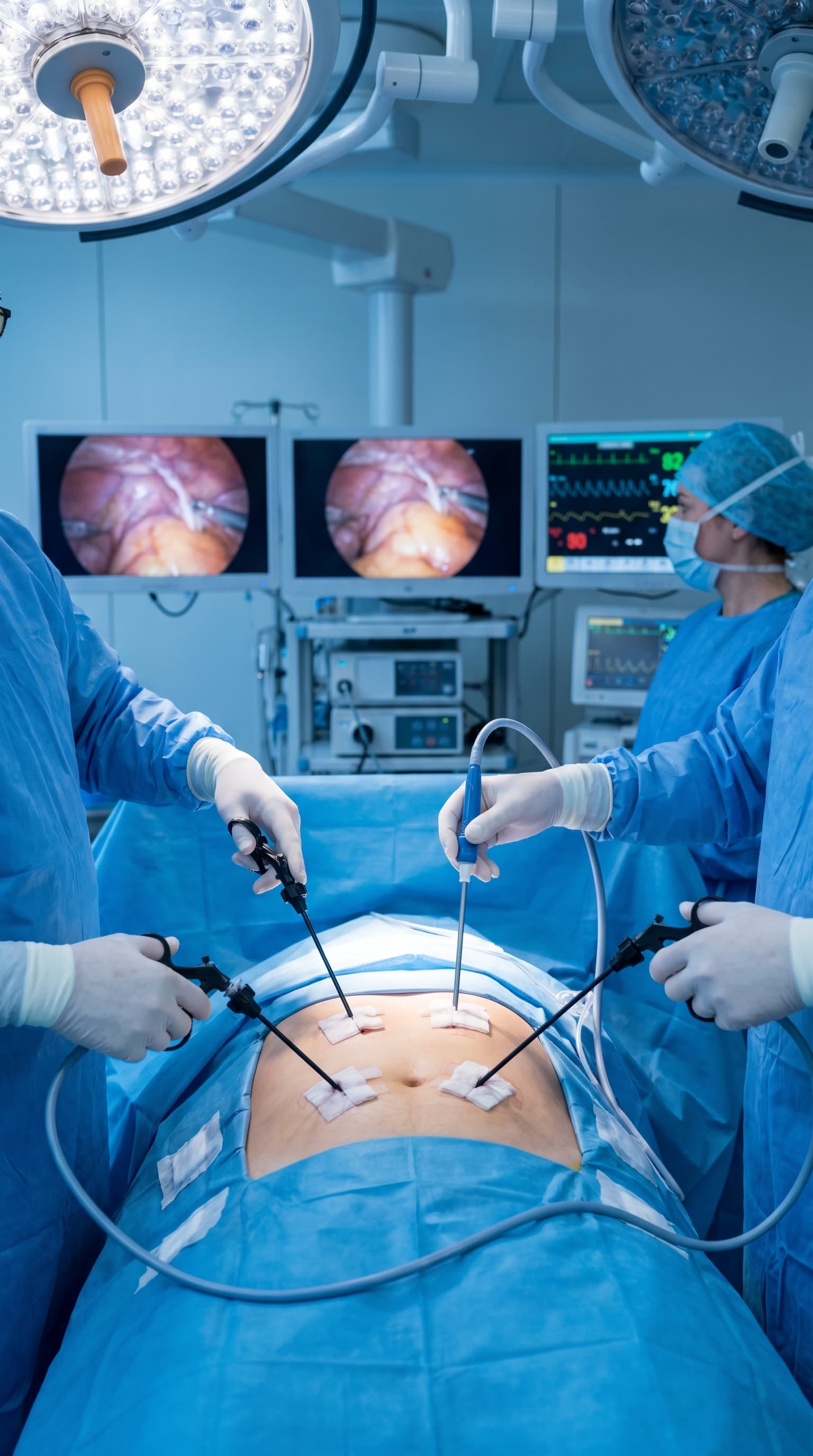
Where appropriate, laparoscopic TEP or TAPP repair is performed using minimally invasive techniques and synthetic mesh reinforcement.

04
Patients receive guidance on pain management, mobility, wound care, physical activity, lifting restrictions, and gradual return to normal activities.

05
Follow-up consultations help monitor healing, recovery, and any signs of recurrence or complications.
Frequently Asked Questions
Inguinal hernias do not have a permanent medical treatment. Surgery may sometimes be deferred for a small or reducible hernia or when a patient is medically unfit for surgery. However, an irreducible or strangulated hernia requires prompt surgical evaluation and may require emergency surgery.
Open repair is performed through an incision in the groin, while laparoscopic repair uses small abdominal incisions and a camera-guided approach. Laparoscopic repair may offer smaller incisions, less postoperative discomfort, and faster recovery in appropriately selected patients.
TEP stands for Totally Extraperitoneal repair, while TAPP stands for Transabdominal Preperitoneal repair. Both are laparoscopic techniques in which synthetic mesh is used to reinforce the weakened area. Your surgeon will recommend the appropriate technique based on your clinical condition.
Many patients can be discharged on the day after laparoscopic surgery, while open repair under local anaesthesia may sometimes be performed as a day-care procedure. The actual timing depends on the surgical approach, clinical condition, and recovery.
The time required to return to work varies according to the type of surgery, your clinical condition, and the nature of your work. Some patients may return within a week, while others may require additional recovery time. Your surgeon will provide individual guidance.

Inguinal Hernia Care Insights
Consult with an experienced specialist and take the first step toward better health, improved quality of life, and long-term wellness through advanced bariatric, laparoscopic, and robotic surgical care in Mumbai.




3K+ Satisfied Patients