


Comprehensive Evaluation
Medical treatment and lifestyle changes are generally considered before surgery for reflux disease. Appropriate investigations help assess the hiatus hernia, reflux severity, and esophageal function.
A minimally invasive surgical procedure used to repair a hiatus hernia and address reflux-related symptoms when surgery is considered appropriate.
Understanding Hiatus Hernia Surgery
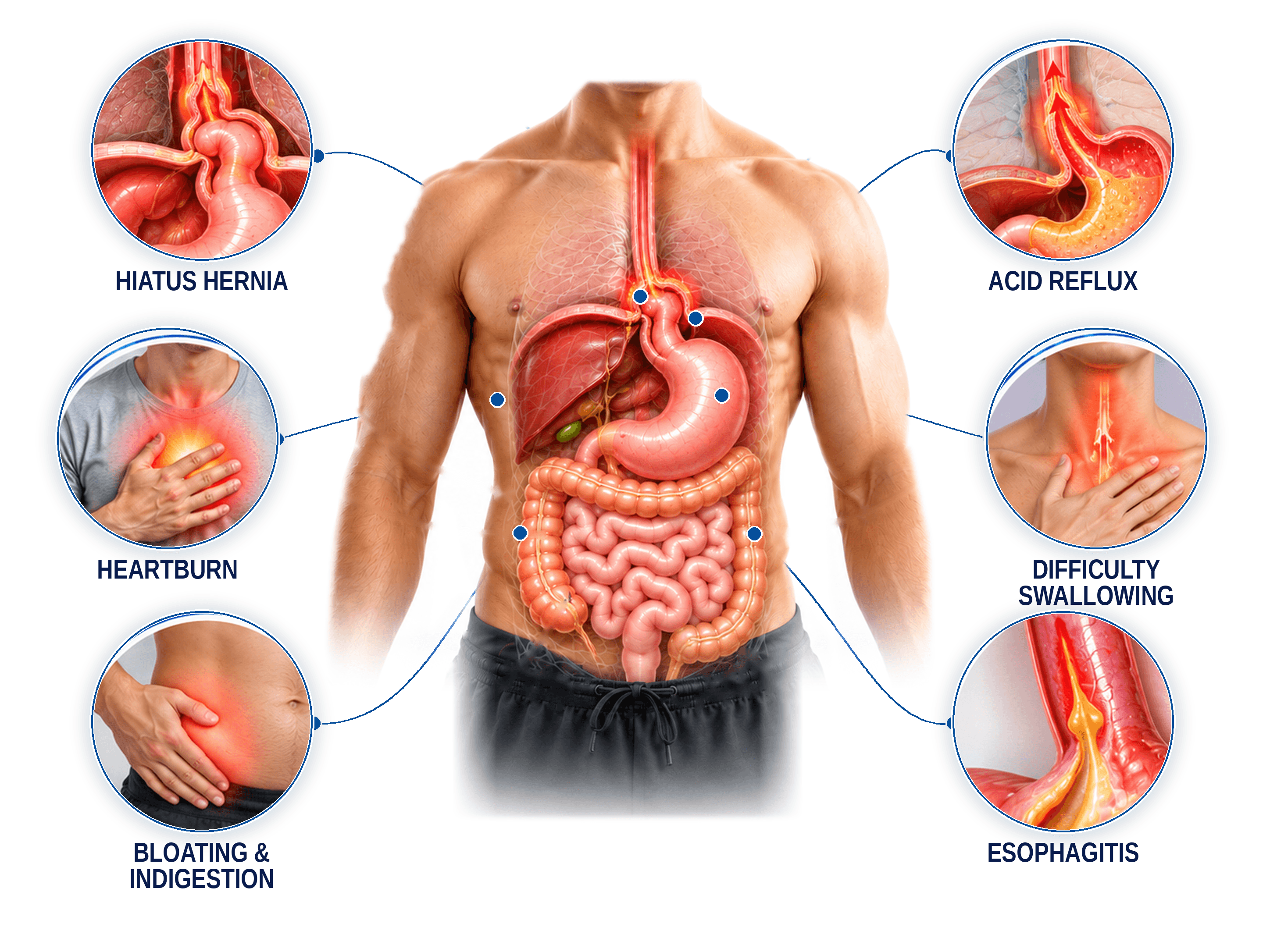
A hiatus hernia occurs when part of the stomach moves through the diaphragm into the chest. It may be associated with gastroesophageal reflux disease, although not every hiatus hernia causes reflux symptoms.
Common types include sliding, para-esophageal, and mixed hiatus hernias. Factors such as age-related tissue changes, increased abdominal pressure, and obesity may contribute to their development.
Symptoms may include heartburn and acid regurgitation, difficulty swallowing, bloating or indigestion, symptoms that worsen when lying down or bending, and throat or respiratory symptoms in some patients.
Persistent or poorly controlled gastroesophageal reflux disease may lead to complications such as esophagitis, ulcers, strictures, or Barrett's esophagus.
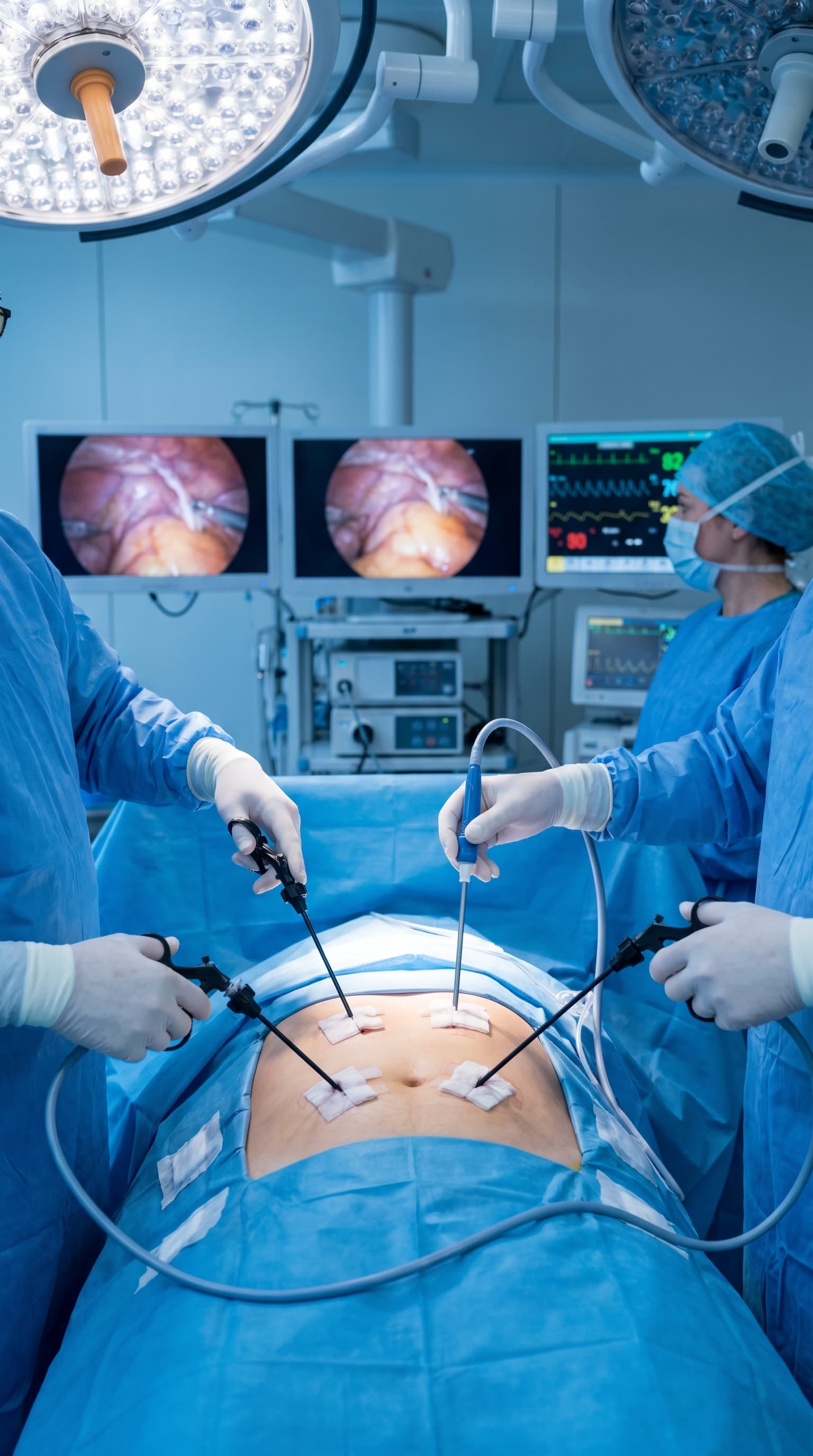
Laparoscopic hiatus hernia repair with Nissen fundoplication is performed through small abdominal incisions. The hernia is repaired, and the upper part of the stomach is wrapped around the lower esophagus to help restore the anti-reflux mechanism.
How Hiatus Hernia Surgery Works
Evaluation may include clinical examination and investigations such as gastroscopy, barium meal X-ray, 24-hour pH monitoring, and esophageal manometry, depending on symptoms and clinical requirements.
Medical treatment and lifestyle changes are generally considered before surgery for reflux disease. Appropriate investigations help assess the hiatus hernia, reflux severity, and esophageal function.

During surgery, the hiatal opening is repaired after the esophagus and upper stomach are carefully mobilised.

The hiatal defect is closed using sutures, with mesh reinforcement considered where appropriate based on the surgical findings.

The upper part of the stomach is wrapped around the lower esophagus to support the anti-reflux mechanism and help reduce reflux symptoms.
Who Should Consider Hiatus Hernia Surgery

Have persistent or recurrent reflux symptoms despite appropriate medical treatment.

Experience symptoms that return soon after stopping medical therapy.

Have complications associated with gastroesophageal reflux disease.

Have increased acid exposure documented through reflux testing.
Have a mechanically defective lower esophageal sphincter identified on manometry.
Have severe or difficult-to-control esophagitis, esophageal ulceration, or stricture.
Have Barrett's esophagus or high-grade dysplasia requiring specialist evaluation.
Have a para-esophageal hernia requiring surgical correction.
Benefits of Hiatus Hernia Surgery
Repair of the hiatus hernia
Support for the anti-reflux mechanism
Smaller abdominal incisions
Less postoperative pain and discomfort in appropriately selected patients
Earlier mobilisation
Shorter hospital stay in many cases
Earlier return to normal activities and work
Better visualisation of the surgical field through magnified laparoscopic imaging

Laparoscopic surgery may allow the surgeon to repair the hiatal defect and perform fundoplication through minimally invasive access while supporting recovery in appropriately selected patients.
Possible Risks & Side Effects

The fundoplication may fail or symptoms may recur in some patients.

Temporary difficulty swallowing may occur after surgery and generally improves during recovery.

Infection may occur at one or more of the surgical incision sites.

There is a risk of injury to the esophagus or stomach during surgery.

Internal bleeding may occur during or following surgery.

Some patients may experience persistent bloating or difficulty belching following fundoplication.
The hiatus hernia may recur after surgical repair in some patients.
*Persistent or worsening swallowing problems, abdominal pain, swelling, drainage, or bleeding after surgery should be reported to the treating surgeon.
Our Approach to Hiatus Hernia Surgery

01
Your symptoms, medical history, reflux pattern, and relevant investigations are assessed to understand the hiatus hernia and esophageal function.

02
The treatment plan is based on your symptoms, investigation findings, hernia characteristics, and overall health.
03
Where appropriate, laparoscopic hiatus hernia repair and Nissen fundoplication are performed using minimally invasive techniques.

04
Guidance is provided on diet progression, medications, wound care, physical activity, and recovery. Patients may initially follow a liquid diet before progressing to soft and then regular food as advised.

05
Follow-up helps monitor recovery, swallowing, reflux-related symptoms, and any potential complications or recurrence.
Frequently Asked Questions
After consultation, your doctor will recommend the necessary investigations to assess your condition and fitness for surgery. If you take blood-thinning medication, your surgeon will advise you about whether it needs to be stopped before surgery. Admission may be planned on the morning of surgery or the previous evening depending on your treatment plan.
Some postoperative pain or discomfort is expected. Laparoscopic surgery generally involves smaller incisions and may result in less postoperative discomfort. Pain medication is provided during the recovery period as required.
Many patients are discharged on the day after laparoscopic surgery. The actual duration of hospitalisation depends on your clinical condition, recovery, and the surgeon's assessment.
Diet is gradually progressed after surgery. Patients may initially be advised to follow a liquid diet before moving to soft foods and then a regular diet as recommended. Heavy lifting and strenuous activities should be avoided during the advised recovery period.
Some patients may return to work within a week, depending on their recovery and the nature of their work. Your surgeon will provide individual guidance on returning to work, exercise, driving, and other activities.

Hiatus Hernia Care Insights
Consult with an experienced specialist and take the first step toward better health, improved quality of life, and long-term wellness through advanced bariatric, laparoscopic, and robotic surgical care in Mumbai.




3K+ Satisfied Patients