


Diagnosis & Evaluation
Diagnosis is usually based on medical history and physical examination. Blood tests, abdominal ultrasound, and CT scanning may also be recommended to assess inflammation and confirm the diagnosis.
A surgical procedure to remove an inflamed or infected appendix and prevent complications associated with untreated appendicitis.
Understanding Appendix Removal Surgery
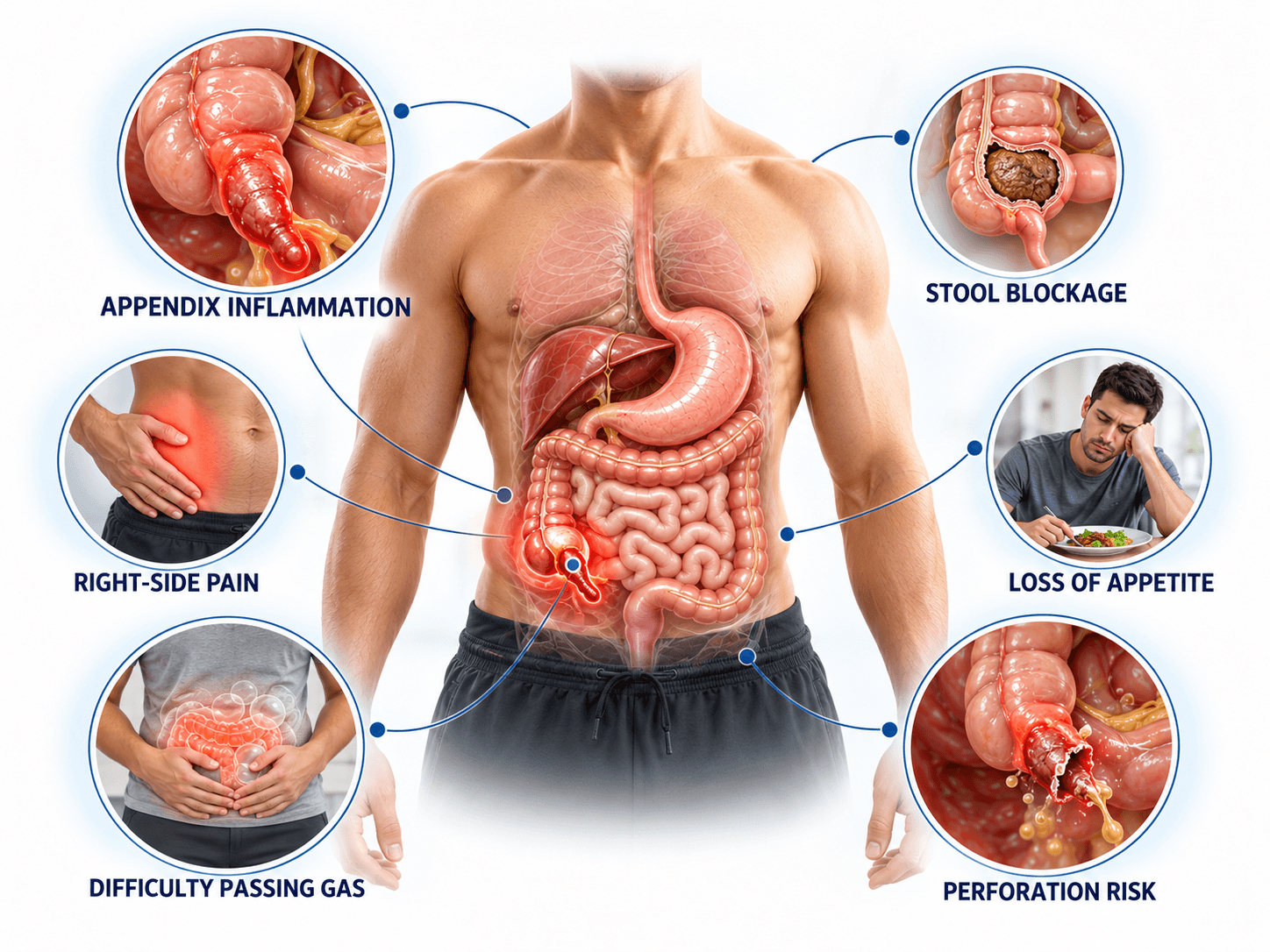
Appendicitis is inflammation of the appendix, which is connected to the large intestine at the cecum. Inflammation commonly occurs when the opening of the appendix becomes blocked by stool or another obstructing material. It may also occur in association with infection or, rarely, other underlying conditions.
Acute appendicitis may cause pain, particularly in the right lower abdomen, loss of appetite, fever, nausea or vomiting, abdominal tenderness, abdominal distension, and difficulty passing gas in some cases.
Untreated appendicitis can progress to an appendicular abscess or perforation. A perforated appendix may cause peritonitis and requires urgent treatment.
Laparoscopic appendectomy is commonly performed through small abdominal incisions using a camera and specialised surgical instruments. The appropriate surgical approach depends on the severity of appendicitis and the patient's clinical condition.
How Appendix Removal Surgery Works
Diagnosis and treatment planning are based on the patient's symptoms, physical examination, investigation findings, and severity of appendicitis.
Diagnosis is usually based on medical history and physical examination. Blood tests, abdominal ultrasound, and CT scanning may also be recommended to assess inflammation and confirm the diagnosis.

In laparoscopic appendectomy, three small abdominal incisions are generally used to introduce a laparoscope and surgical instruments. The appendix is identified, separated, and removed through one of the small incisions.

A single-incision laparoscopic appendectomy may be performed in selected patients through an incision within the navel.

If an appendicular abscess has developed, drainage and initial treatment may be required before appendix removal is considered at a later stage.
Who Should Consider Appendix Removal Surgery

Have acute appendicitis confirmed through clinical assessment and investigations.

Have persistent or worsening pain in the right lower abdomen.

Have appendicitis associated with fever, nausea, or vomiting.

Have an inflamed appendix requiring surgical treatment.
Have an appendicular abscess requiring treatment and subsequent surgical assessment.
Have a perforated appendix or other complication requiring surgical management.
Are medically suitable for the recommended surgical approach.
Benefits of Appendix Removal Surgery
Removes the inflamed or infected appendix
Helps prevent complications associated with untreated appendicitis
Laparoscopic surgery involves small abdominal incisions
May result in less postoperative pain and discomfort
May reduce the risk of wound-related complications compared with open surgery
May support earlier mobilisation and recovery
May allow a shorter hospital stay in uncomplicated cases
May support an earlier return to normal activities and work
Single-incision laparoscopic surgery may provide an additional cosmetic benefit in selected patients

Choosing appendix removal surgery in Mumbai provides access to individualized surgical planning based on the severity of appendicitis and your overall health.
Possible Risks & Side Effects

Temporary pain or postoperative discomfort may occur during recovery.

Bleeding may occur during or after the surgical procedure.

Infection may develop at one or more of the surgical incision sites.

An intra-abdominal infection or abscess may develop, particularly in complicated appendicitis.

There is a risk of injury to nearby organs or structures during surgery.

Side effects or complications related to anaesthesia may occur.
Blood clot formation is a possible complication associated with surgery.
The risk of complications may be higher when appendicitis has progressed to an abscess or perforation.
*Careful evaluation, appropriate surgical planning, postoperative monitoring, and follow-up help support safe recovery.
Our Approach to Appendix Removal Surgery

01
Assessment of symptoms, medical history, physical examination, blood tests, and imaging findings.

02
Treatment planning based on the severity of appendicitis, presence of complications, and overall health.

03
Laparoscopic appendectomy is performed where appropriate using minimally invasive techniques.

04
Guidance on pain management, wound care, activity, diet, and recovery.

05
Follow-up to monitor healing and recovery after appendix surgery.
Frequently Asked Questions
Appendix removal surgery, or appendectomy, is performed to remove an inflamed or infected appendix. Laparoscopic surgery is commonly used.
Laparoscopic appendectomy uses smaller incisions and may offer less postoperative discomfort, earlier mobilisation, and faster recovery in suitable patients.
In selected cases involving an appendicular abscess, drainage and initial treatment may be required before appendix removal is considered. The appropriate approach depends on the patient's condition.
Recovery depends on the severity of appendicitis and whether complications are present. Uncomplicated cases may allow a return to normal activities in about a week, while complicated cases may require longer.
Severe or worsening abdominal pain, fever, vomiting, abdominal distension, or significant tenderness requires prompt medical assessment.

Appendix Care Insights
Consult with an experienced specialist and take the first step toward better health, improved quality of life, and long-term wellness through advanced bariatric, laparoscopic, and robotic surgical care in Mumbai.




3K+ Satisfied Patients