


Weight-Dependent Effects
Weight loss following surgery can help reduce insulin resistance. Caloric restriction and subsequent weight loss may contribute to improved blood sugar control.
A surgical approach that may help improve blood sugar control in selected people with type 2 diabetes, particularly when diabetes remains difficult to control despite medical treatment.
Understanding Metabolic Surgery for Diabetes
Type 2 diabetes is a chronic condition that can become increasingly difficult to control over time. Diet, exercise, and medications remain important components of diabetes management, but some patients continue to have difficulty achieving their treatment goals despite multiple medications or insulin therapy.
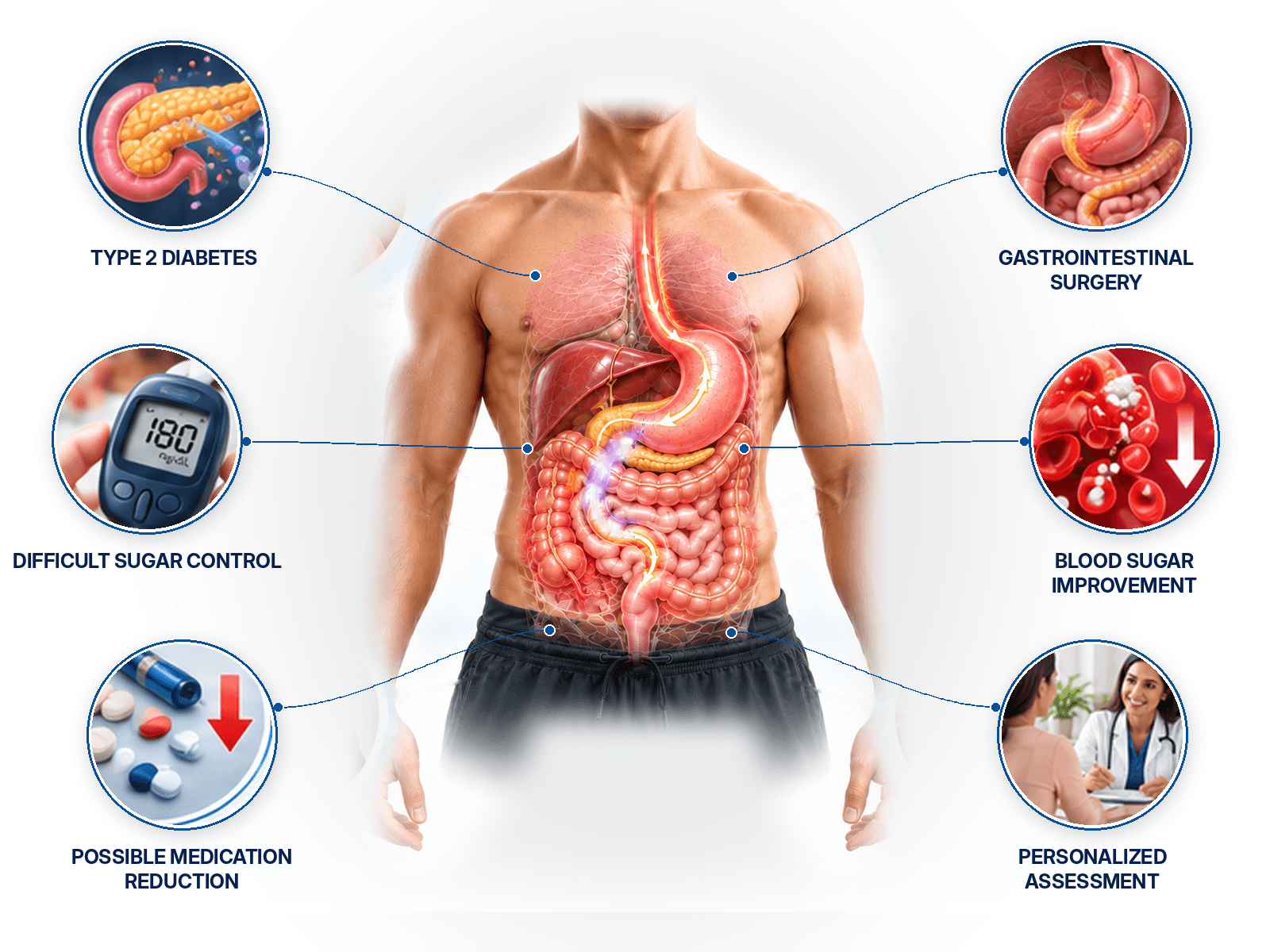
Metabolic surgery developed from observations that patients undergoing certain gastrointestinal surgeries experienced significant improvements in diabetes. Bariatric surgery has subsequently been associated with improvement in blood sugar control and, in some patients, a reduction in the need for anti-diabetic medications.
Metabolic surgery may therefore be considered in selected patients with type 2 diabetes, particularly when diabetes and associated metabolic conditions remain difficult to manage with conventional treatment.
The decision to undergo metabolic surgery is individualized and requires assessment of diabetes duration, pancreatic function, age, BMI, current diabetes treatment, overall health, and suitability for surgery.
How Metabolic Surgery Works
Metabolic surgery may improve type 2 diabetes through both weight-dependent and weight-independent mechanisms.
Weight loss following surgery can help reduce insulin resistance. Caloric restriction and subsequent weight loss may contribute to improved blood sugar control.

Metabolic changes may occur soon after surgery, before significant weight loss takes place, indicating that the benefits are not dependent only on weight reduction.

Changes in the movement of food through the gastrointestinal tract may influence the release of gut hormones such as GLP-1 and PYY, which have been proposed as contributors to metabolic improvement.

Changes involving bile acids and gut flora have also been proposed as contributing factors to the metabolic effects of surgery.

The type of metabolic procedure and its suitability depend on the patient's diabetes status, clinical condition, metabolic health, and overall surgical requirements.
Who Should Consider Metabolic Surgery

Have a shorter duration of diabetes, as patients with diabetes for less than five years may have a better chance of remission.

Have good pancreatic function, with higher C-peptide levels indicating better pancreatic reserve and potentially better outcomes.

Are younger, as younger patients may have more favourable outcomes.

Have a BMI that, together with diabetes control and metabolic health, supports consideration of metabolic surgery.
Are not dependent on insulin, as patients who are not using insulin may have better outcomes than those already requiring insulin therapy.
Have type 2 diabetes that remains difficult to control despite appropriate medical treatment.
Have undergone a detailed assessment of diabetes control, pancreatic function, medical history, and overall health.
Benefits of Metabolic Surgery
Improved blood sugar control
Potential reduction in the need for anti-diabetic medications
Potential improvement or remission of type 2 diabetes in suitable patients
Significant weight loss where obesity is present
Reduction in insulin resistance associated with weight loss
Potential improvement in associated metabolic conditions
A treatment option for selected patients whose diabetes remains difficult to control with medical therapy

The extent of improvement varies between individuals and depends on factors such as diabetes duration, pancreatic function, age, BMI, insulin use, and overall health.
Possible Risks & Side Effects

The possible surgical risks depend on the specific metabolic or bariatric procedure selected for the patient.

As with other major surgical procedures, risks associated with anaesthesia need to be considered before treatment.

Certain metabolic or bariatric procedures may require ongoing nutritional monitoring and postoperative guidance.

Changes in diabetes control and metabolic health require ongoing monitoring following surgery.
*The supplied clinical information does not provide a detailed list of procedure-specific complications. Individual risks and nutritional or metabolic considerations should be discussed with the surgical team before treatment.
Our Approach to Metabolic Surgery

01
Assessment of your diabetes history, treatment requirements, BMI, pancreatic function, medical history, and overall health.

02
Your suitability for metabolic surgery is evaluated using individual factors such as diabetes duration, C-peptide levels, age, BMI, and insulin use.

03
The appropriate metabolic or bariatric procedure is selected according to your clinical requirements and overall treatment plan.

04
Guidance following surgery is an important part of recovery and ongoing metabolic management.

05
Regular follow-up helps monitor diabetes control, metabolic changes, weight management, and the need for ongoing medical treatment.
Frequently Asked Questions
Metabolic surgery is a surgical treatment that may help improve type 2 diabetes in selected patients. Its effects may involve both weight loss and changes in metabolic and gastrointestinal pathways.
Suitability depends on several factors, including the duration of diabetes, pancreatic function, age, BMI, insulin use, overall health, and response to medical treatment. A detailed clinical assessment is required.
Some patients may experience significant improvement in blood sugar control and may require fewer anti-diabetic medications after surgery. The response varies between individuals and medication changes should be guided by the treating medical team.
No. The existing clinical information describes both weight-dependent and weight-independent mechanisms. Changes in gut hormones, bile acids, and gut flora have been proposed as contributors to the metabolic effects of surgery.
Diabetes improvement and remission are not the same for every patient. Outcomes can vary depending on factors such as diabetes duration, pancreatic function, age, BMI, and insulin use. Long-term follow-up remains important.

Diabetes Care Insights
Consult with an experienced specialist and take the first step toward better health, improved quality of life, and long-term wellness through advanced bariatric, laparoscopic, and robotic surgical care in Mumbai.




3K+ Satisfied Patients